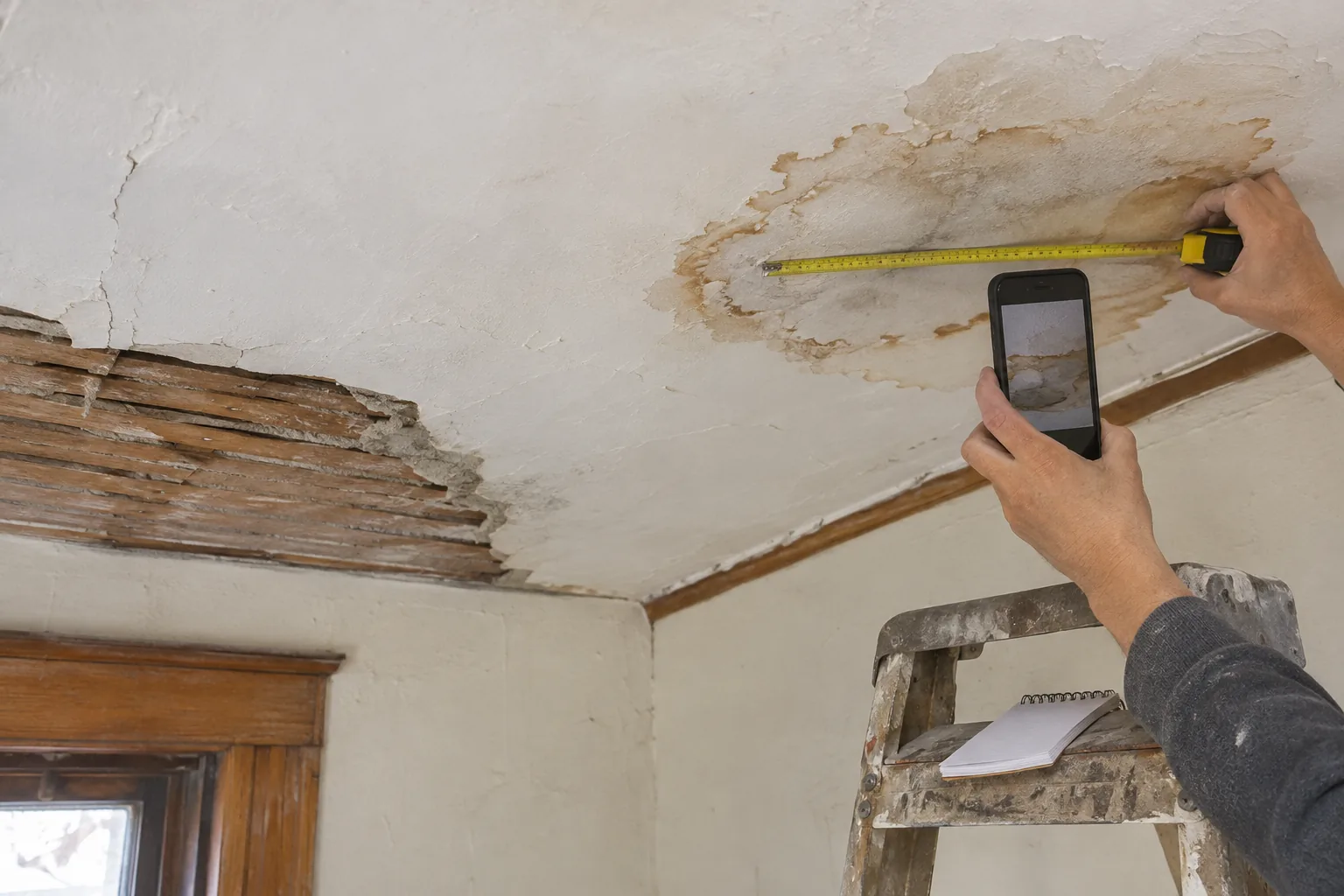
Hand photographing a water-stained ceiling with a phone beside a tape measure for an insurance claim

Ceiling Water Damage Insurance Claims in Massachusetts

Home insurance in Massachusetts usually pays for a water-damaged ceiling when the water came suddenly and by accident, and for a burst pipe only if the home was heated and lived in.

When Home Insurance Covers Water Damage to a Ceiling

Home insurance in Massachusetts usually covers a water-damaged ceiling when the water arrived suddenly and by accident. The Massachusetts Division of Insurance puts a condition on burst pipes: most policies pay only if the home was kept heated and was not left unoccupied. Your insurer makes the final call on every claim.

Where the water came fromWhat the Division of Insurance saysWhat to check before you call the insurer
A pipe that froze and splitMost policies cover sudden, accidental burst-pipe water if the home was heated and occupiedThermostat setting and whether anyone was living there
An ice dam at the eaveDamage may be covered if it is sudden and not caused by a lack of maintenanceGutter and roof upkeep records, and when the stain first showed
A tub, toilet or supply line upstairsNo separate rule in the notice; insurers look at whether it was suddenThe time the drip started and what failed
A slow drip that stained over monthsNo separate rule in the notice; ask your agent before you fileHow long the stain has been there

Whichever one it was, our statewide ceiling repair service starts by finding which of these sources the water came from, because that is the first thing an adjuster asks.

Why Ceiling Leaks Fill So Many Massachusetts Claims

Water causes close to half of all homeowners claims in Massachusetts: the Division of Insurance reported that 48.6% of the state's homeowners claims in 2024 were non-flood water losses and freezing damage. A frozen pipe in an outside wall or over an unheated porch often lets go on the thaw, and the first place the water shows is the ceiling below it.

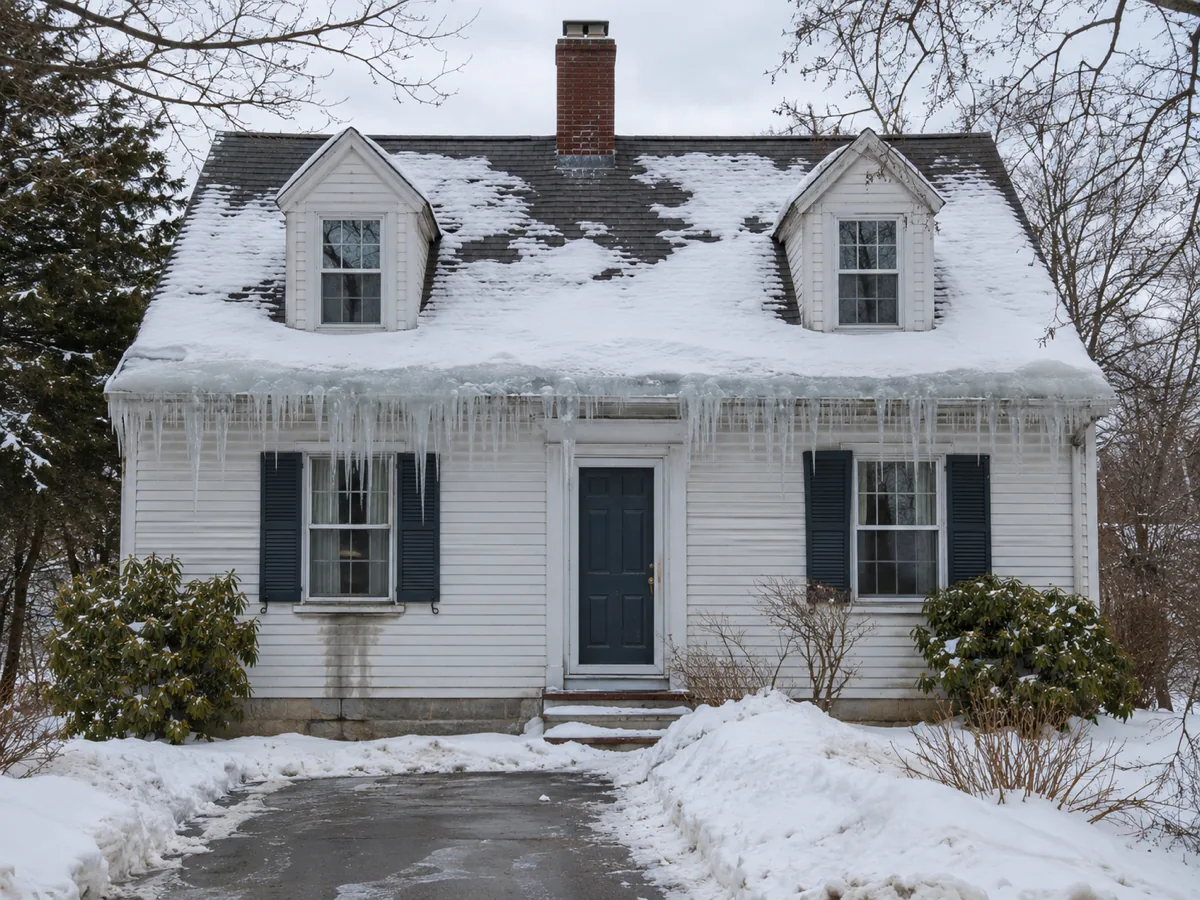
Ice dams add to the count each snowy winter. The Massachusetts Property Insurance Underwriting Association has said it is seeing more ice dam claims, and those leaks tend to stain the corner of a top-floor ceiling along an outside wall.

Ice dam and icicles along the eaves of a snow-covered Massachusetts cape in winter
Meltwater trapped behind an ice dam backs up under shingles and shows up as a stain on a top-floor ceiling.

Sagging Ceiling Insurance Claims Start With Draining It

A sagging ceiling is judged by the water that caused it, so a bulge from a burst pipe goes through the same questions as any burst-pipe claim. Before any of that, the water has to come out safely.

  1. 1

    Keep everyone out from under it

    A bowed drywall or plaster ceiling is holding water, and it can drop without warning once the board softens.

  2. 2

    Turn off the water and the circuit

    Close the valve upstairs or the main, then switch off the breaker for any light or fan in the wet area.

  3. 3

    Photograph the bulge first

    Take wide and close photos of the sag, the drip and anything wet in the room, because the bowed shape is gone once it drains.

  4. 4

    Drain it into a bucket

    Poke a small hole at the lowest point with a screwdriver so the water runs out instead of bringing the ceiling down.

  5. 5

    Call your insurer and us

    Tell the insurer what you did to stop the damage, and tell us where the water showed, so we can open and dry the right section.

Condo Ceiling Water Damage and the Unit Above

In a condo, a ceiling leak can involve your own policy, the association's master policy and the policy of the owner upstairs, so report it to all three early. Your master deed and the association's insurance documents decide where one policy stops and the next starts, and the property manager can send you both.

Give each of them the same facts: the time the water appeared, which unit it seemed to come from and what we found when we traced it. When the source sits inside the unit above, we may need the owner's permission to look at their tub, toilet or supply line before we close your ceiling.

Documenting a Ceiling Leak for the Adjuster

Photograph the ceiling before anyone cuts into it, then keep a record of every step until the adjuster has seen the damage or said they do not need to.

  1. Mark the stain edge

    Trace the outline lightly in pencil and photograph it, so you can show whether it grew after the first day.

  2. Write down the times

    Note when you first saw water, when you shut it off and when you called, while it is fresh.

  3. Keep what we remove

    Bag the wet drywall or plaster we cut out and hold it until your adjuster says it can go.

  4. Ask us for the source

    We follow the water back along the joists using a moisture meter plus a thermal camera, so you can tell the insurer whether it came from a pipe, a fixture or the roof edge.

  5. Save every receipt

    Keep the bills for fans, buckets, a plumber's visit and our repair together with the photos.

Call Now and Say Which Ceiling Is Wet

Tell us which ceiling is wet, whether the water has stopped, and whether a light fixture sits in the wet area.

Call If the Ceiling Is Dripping Now

State Rules That Belong in the Ceiling Repair Estimate

Lead paint, untested plaster and emergency permits can each add work to a Massachusetts ceiling repair, so the estimate your adjuster reviews should name them before the job starts.

Situation in your homeState ruleWhat it adds to the repair
Built before 1978, more than 6 sq ft of painted ceiling disturbed in one room454 CMR 22.11The work must be done by a licensed Lead-safe Renovation Contractor, unless a certified tester finds no lead
Plaster or ceiling tile that has never been tested310 CMR 7.15It is handled as asbestos, and abatement needs MassDEP notice at least ten working days ahead
A repair done in an emergency, at night or on a weekend780 CMR 105.2.1Any permit application goes to the building official the next working business day
An ordinary patch with no structural cutting780 CMR 105.2.2No permit or notice is needed

An estimate that leaves out lead-safe work on a 1920s ceiling can leave you paying the difference later. Our guide to ceiling repair costs covers what moves the price for drywall and for plaster.

From Claim Approval to a Finished Ceiling

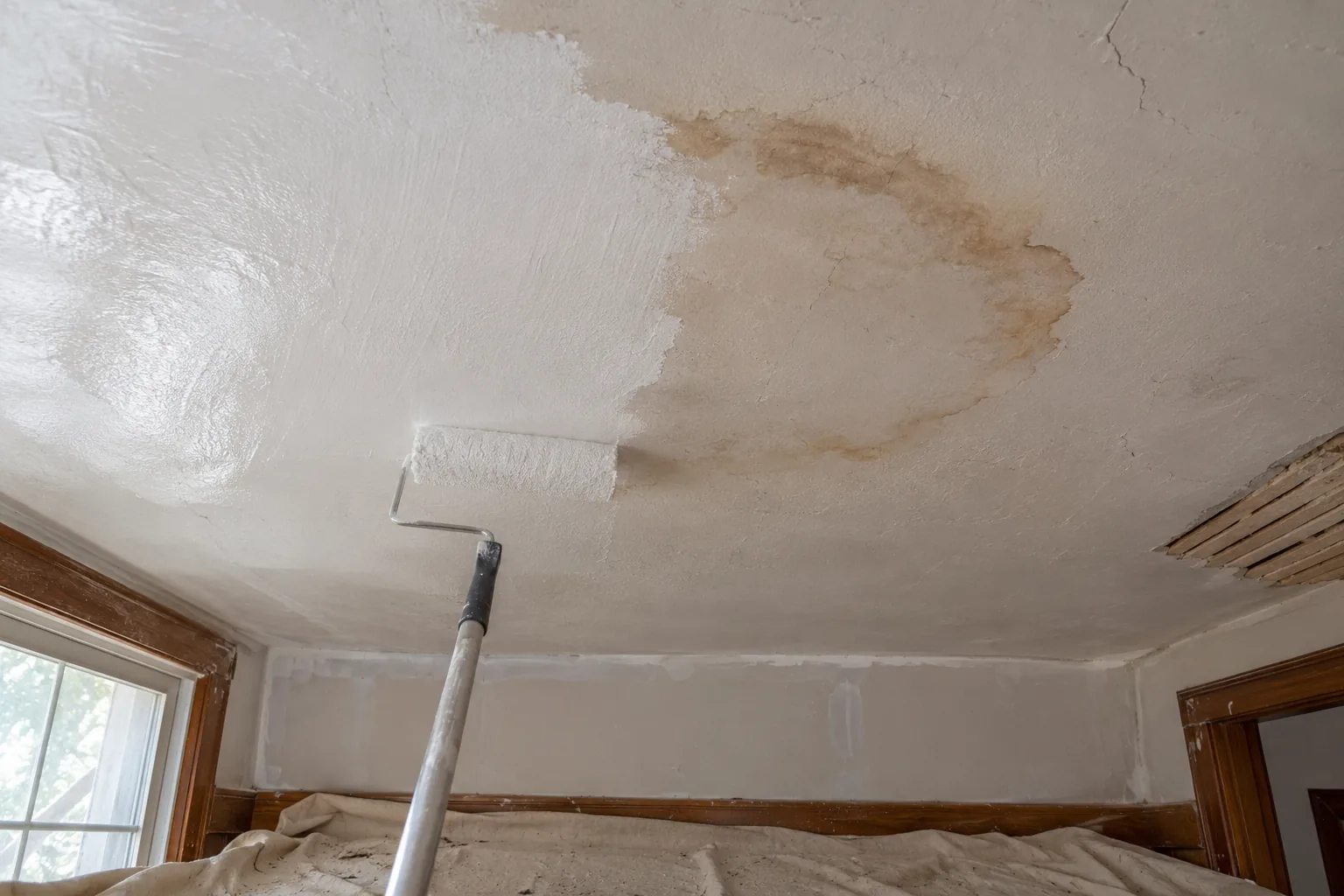
Once your adjuster has seen the damage, we open the wet section, dry the joists and insulation until our moisture readings come back dry, then rebuild with new drywall or patched plaster and a stain-blocking primer under the paint. Closing a ceiling over damp framing is the one shortcut that brings the stain and the claim back.

Older ceilings take longer. Many of the ceiling leaks in Boston and the older mill cities we open are built of plaster over wooden lath strips, and plaster that has let go of the lath has to be re-secured or rebuilt in coats before it sits flush.

Roller applying stain-blocking primer over a rebuilt ceiling patch once the framing reads dry
Primer goes on only after the framing reads dry and the patch is rebuilt to sit sound with the old ceiling.

FAQs About Ceiling Water Damage Insurance in Massachusetts

Is a sagging ceiling covered by insurance?

Often, when the water behind the sag came from a sudden event such as a burst pipe in a heated home. The sag is treated by its cause, so a slow leak or a maintenance problem can be refused. Your insurer decides.

What if the house was empty when the pipe burst?

That can cost you the claim. The Massachusetts Division of Insurance says most policies cover burst-pipe water only if the home was heated and not left unoccupied, so tell your agent how long it was empty and what the heat was set to.

Is it worth filing a claim for a small ceiling stain?

Sometimes not. If the repair is a dry stain sealed with primer and repainted, compare our price with your deductible before you file. A stain that keeps spreading or a soft ceiling is a different job and worth reporting.

Does the adjuster need to know where the water came from?

Yes. Massachusetts coverage turns on the cause, a burst pipe in a heated home or a sudden ice dam leak, so the adjuster will ask. We trace the water back to its source before we cut, and you can pass that on.

Should the estimate include lead-safe work for an older ceiling?

Yes, when the home was built before 1978 and a single room loses over six square feet of its painted ceiling surface. Massachusetts requires a licensed Lead-safe Renovation Contractor for that work, unless a certified test finds no lead.

A Ceiling Leak You May Be Claiming Tonight

If water is coming through the ceiling right now, call before you call the insurer. A person answers at any hour, walks you through shutting off the water and draining a bulge, and tells you what to photograph first.

Call a Ceiling Repair Crew