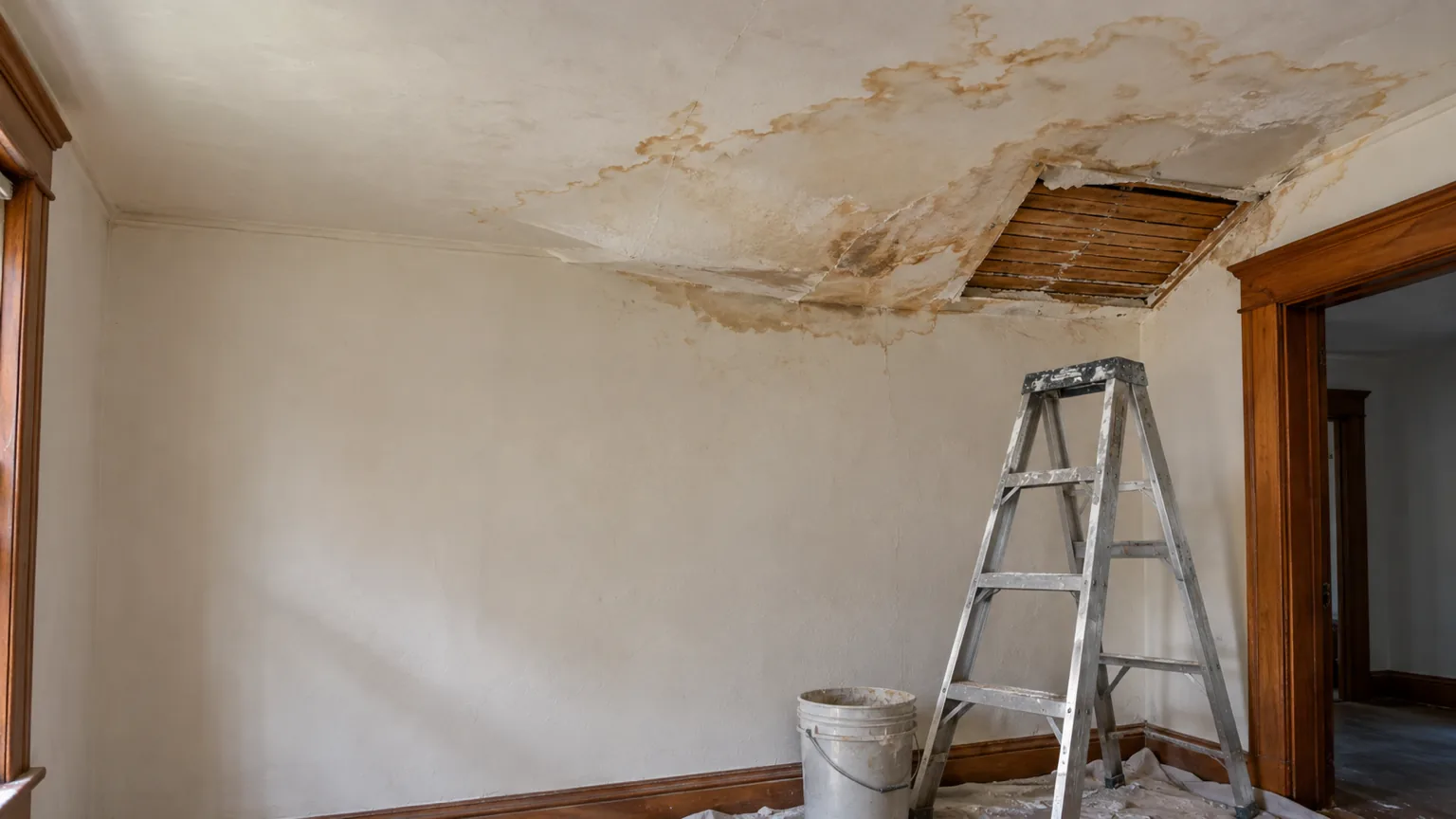
A typical professional ceiling leak repair costs $250 to $1,700 for the damaged section, a national band that also frames Massachusetts jobs. Drywall runs $45 to $80 a square foot and plaster on lath $65 to $90. In a house built before 1978, the next question is whether state lead or asbestos rules apply to the ceiling being opened.
Key takeaways
- A typical professional ceiling repair costs $250 to $1,700, finished and painted, with the leak itself priced separately.
- Drywall ceilings run $45 to $80 per square foot; plaster and lath ceilings run $65 to $90 per square foot.
- In a home built before 1978, disturbing more than 6 square feet of painted ceiling in a room brings in the Massachusetts lead-safe renovation rules.
- The Division of Insurance found that 48.6% of Massachusetts homeowners claims in 2024 were non-flood water or freezing losses.
How Much Does Ceiling Leak Repair Cost?
A typical professional ceiling leak repair costs $250 to $1,700, and the square footage of wet ceiling decides where in that band a job lands.
| Part of the job | Typical cost | What the figure covers |
|---|---|---|
| Repairing a water damaged section, finished | $250-$1,700 | Patch or replace the section, tape, compound, texture, stain-blocking primer and paint |
| Drywall ceiling | $45-$80 per sq ft | Removing the wet board, new board and finishing, labor and materials |
| Plaster and lath ceiling | $65-$90 per sq ft | Plaster rebuilt in coats, with the lath behind it repaired too |
Those figures leave out fixing the source (a roof, a drain, a supply line), lead-safe or asbestos procedures, and replacing a whole room's ceiling, so a quote that looks high often has one of them folded in.
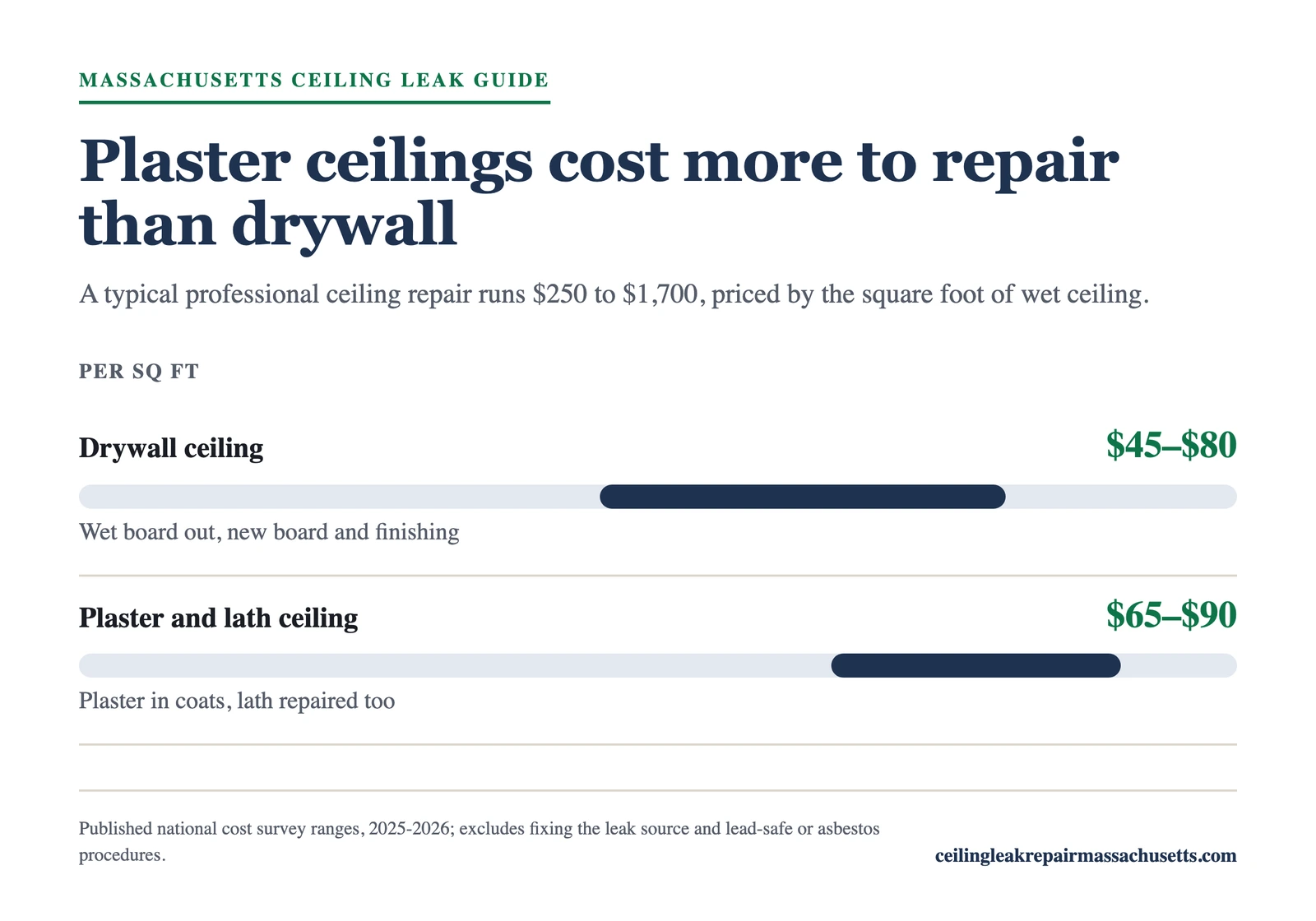
Text version of this infographic
Plaster ceilings cost more to repair than drywall. A typical professional ceiling repair runs $250 to $1,700, priced by the square foot of wet ceiling.
- Drywall ceiling: $45 to $80 per sq ft. Wet board out, new board and finishing
- Plaster and lath ceiling: $65 to $90 per sq ft. Plaster in coats, lath repaired too
Published national cost survey ranges, 2025-2026; excludes fixing the leak source and lead-safe or asbestos procedures.
Why Plaster Ceilings Cost More to Repair Than Drywall
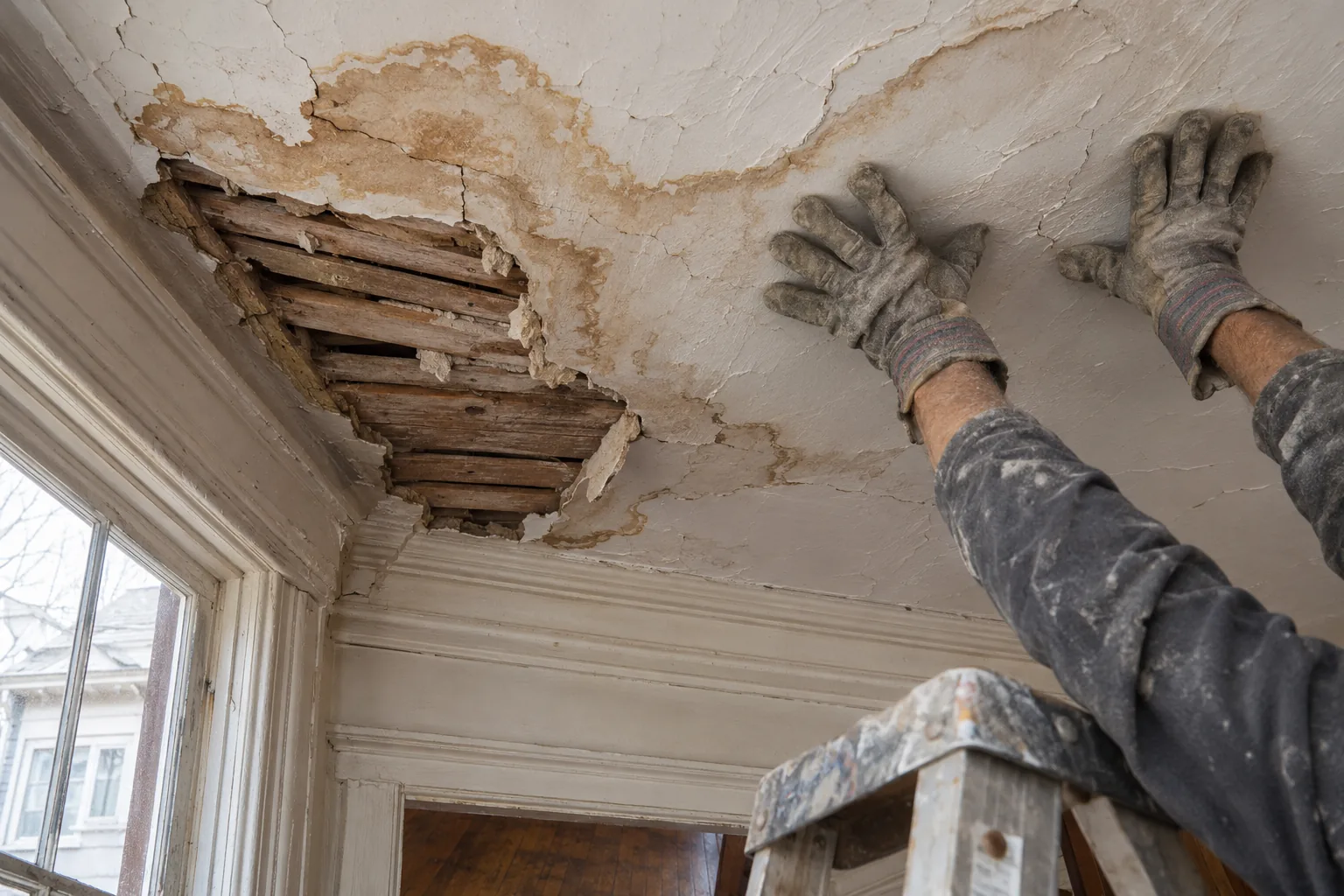
Plaster and lath costs $65 to $90 a square foot against $45 to $80 for drywall, because the wood lath behind the plaster is repaired as well as the surface. Wet plaster loses its grip on the lath when the plaster keys break, so a ceiling can look intact and still be loose a foot past the stain.
That matters more in Massachusetts than in most states. The Census Bureau's 2019-2023 American Community Survey counts 144,167 of Boston's 307,840 housing units as built in 1939 or earlier, and New Bedford's median home dates from 1938. Many of the ceilings opened for ceiling leaks in Boston and the older mill cities are plaster, so a price based on drywall rates often misses by the difference between the two bands.
Where the lath is sound, loose plaster can be re-secured and only the failed patch rebuilt, which keeps the square footage and the bill smaller.
What Moves the Price of a Water Damaged Ceiling Repair
The size of the wet area moves the price more than anything else, and it is usually bigger than the stain. Water runs along a joist or a pipe before it drips, so the soaked board often reaches well past the brown ring you can see.
| Factor | What raises the cost | What lowers it |
|---|---|---|
| Wet area | Water that spread along the joists before it showed | A leak caught while the stain is small |
| Ceiling material | Plaster on lath, especially with loose keys | Drywall in a newer home or a condo |
| Drying | Soaked insulation and framing that must dry before closing | A cavity that reads dry on the moisture meter |
| Finish | Texture or a decorative ceiling to match | A flat, painted ceiling |
| The leak source | A drain, pipe or roof fix added to the job | A source already repaired by the plumber or roofer |
Drying is the factor homeowners least expect. A ceiling closed over damp joists stains and smells again, so the cavity gets checked with a moisture meter and new board waits for dry readings.
Massachusetts Lead and Asbestos Rules That Change the Bill
In a Massachusetts home built before 1978, a paid repair that disturbs more than 6 square feet of painted ceiling in a room must be done by a licensed Lead-safe Renovation Contractor under 454 CMR 22.11. That adds containment, cleanup and testing time, which is why the same patch can cost more in an older triple-decker than in a newer condo.
If a certified lead inspector, or a certified lead-safe renovator-supervisor using a recognized test kit, finds the affected surfaces free of lead, the work falls outside those rules, so ask about a test before the ceiling is opened.
Asbestos is the second trigger: the state air rules in 310 CMR 7.15 list plaster and ceiling tiles as suspect materials, and untested suspect material has to be handled as if it contains asbestos. If abatement is needed, the notice must reach MassDEP at least ten working days before work starts, which adds time as well as cost. A lab result showing no asbestos keeps the job an ordinary repair.
Does Insurance Pay for a Leaking Ceiling in Massachusetts?
Often, when the water was sudden and accidental. The Massachusetts Division of Insurance says most homeowners policies cover a burst pipe only if the home was properly heated and not left unoccupied, and ice dam damage may be covered when it is sudden and not caused by a lack of maintenance.
In 2024, 48.6% of Massachusetts homeowners claims were non-flood water losses and freezing damage, by the Division's count. A slow drip that stained the ceiling over months is usually treated as wear, so the timing of the leak matters as much as its size. Photograph the ceiling before anyone opens it, call your insurer early, and read more about coverage for ceiling leaks before the adjuster visits.
Mistakes That Make a Ceiling Repair Cost Twice
Closing a ceiling before the cavity is dry is the most expensive mistake, because the new board stains and the whole patch has to come out again. Three others come up again and again:
- Painting over a damp stain. Ordinary ceiling paint lets the brown bleed back through within days. A stain needs a dry ceiling and a stain-blocking primer first.
- Patching before the source is fixed. A ceiling rebuilt under a dripping wax ring or an iced eave gets wet again with the next shower or thaw.
- Pricing by the stain. A quote measured only from the visible ring tends to grow once the ceiling is open and the wet edge turns out to be wider.
The useful questions to ask a contractor are how they will find the wet edge, how they will confirm the cavity is dry, and whether lead or asbestos testing is in the price.
When to Call Right Away Instead of Collecting Quotes
Call the same day if the ceiling bulges, drips near a light fixture or the stain keeps spreading after each shower, rain or thaw. A bulge holds water and can fall without warning, and water at a fixture is reaching wiring, so switch that circuit off at the panel first.
Waiting also raises the cost. Gypsum that sits soaked softens and sags, and plaster keys keep letting go, so a repair that would have been one section becomes a room. A dry brown ring that has not grown for weeks can wait for quotes. Our crews take calls for ceiling repair anywhere in Massachusetts at any hour.
Ceiling Leak Repair Cost Questions
Is sealing a water stain cheaper than replacing the ceiling?
Yes, when the ceiling is dry and still firm. Water stain on ceiling repair on sound board needs only a stain-blocking primer and paint. If a moisture meter shows the board is still wet, or it feels soft when pressed, the section has to be cut out and replaced instead.
Does a sagging ceiling cost more to fix?
Usually, yes. Sagging ceiling water damage means the board or plaster has already failed, so the section comes down and is rebuilt at the per-square-foot rate, $45 to $80 for drywall and $65 to $90 for plaster, plus drying time before it is closed.
Do you need a permit to repair a ceiling in Massachusetts?
Not for an ordinary repair. The state building code, 780 CMR 105.2, exempts ordinary repairs and painting from a permit. Substantial cutting away of a wall or cutting a structural beam does need one, and after an emergency repair the application goes in the next working business day.
Does a bathroom ceiling leak cost more to repair?
Often a little, because the ceiling under a tub or shower has to be opened beneath the fixture to see which part is leaking. The ceiling itself is priced at the same drywall or plaster rates; the drain, wax ring or grout repair upstairs is billed separately.