Ceiling Leak Repair Cost in Massachusetts (2026)
What ceiling leak repair costs in Massachusetts: drywall vs plaster per square foot, what moves the price and how insurance billing usually works here.
Guides for Massachusetts homeowners with a leaking or stained ceiling: what to do in the first hour, what the repair costs, how insurance treats it and how the ceiling gets rebuilt.
A ceiling leak in Massachusetts raises the same questions fast: what the repair will cost, whether insurance pays, and how a wet drywall or plaster ceiling gets put back together. The guides here answer them for the state's older houses, long winters and lead and asbestos rules, and they come from the people behind our Massachusetts ceiling leak repair work.
What ceiling leak repair costs in Massachusetts: drywall vs plaster per square foot, what moves the price and how insurance billing usually works here.
Cost is the question most readers bring, and it turns on how much of the ceiling got wet, whether it is drywall or lath and plaster, and whether the house was built before 1978. Plaster takes longer per square foot because the wood lath behind it has to be secured as well.
Age matters for a second reason. In a pre-1978 home, paid work that disturbs over six sq. ft. of coated ceiling surface in a single room falls under the state lead-safe renovation rules, which adds containment and cleanup to the job. A building permit is a separate question: the state building code treats an ordinary ceiling repair as exempt, and only substantial cutting into a wall or a structural beam needs one. The ceiling leak repair cost guide sets out the usual price ranges and what moves a job from a small patch to a full section.
Most ceiling advice online assumes drywall, and a large share of Massachusetts was built before drywall was common. The Census Bureau's 2019-2023 American Community Survey counts 144,167 of Boston's 307,840 housing units as built in 1939 or earlier, and 34,459 of the 85,371 units in Worcester.
Houses that old often have lath-and-plaster ceilings, and plaster fails differently. Water breaks the plaster keys that grip the lath, so a ceiling can look flat and still be hanging loose. State rules also treat untested plaster and ceiling tile as if they contain asbestos, which decides how a wet section can be taken down.
Insurance usually pays for a ceiling leak only when the water arrived suddenly. The Massachusetts Division of Insurance counted non-flood water and freezing losses as 48.6% of the state's homeowners claims in 2024, and it notes that most policies cover a burst pipe only if the house was heated and lived in. Ice dam damage may be covered too, provided it was sudden and not the result of skipped maintenance, so ask your agent before the ceiling comes down. A stain that spread over a whole season is usually treated as wear, so photograph the ceiling before anyone cuts it open.
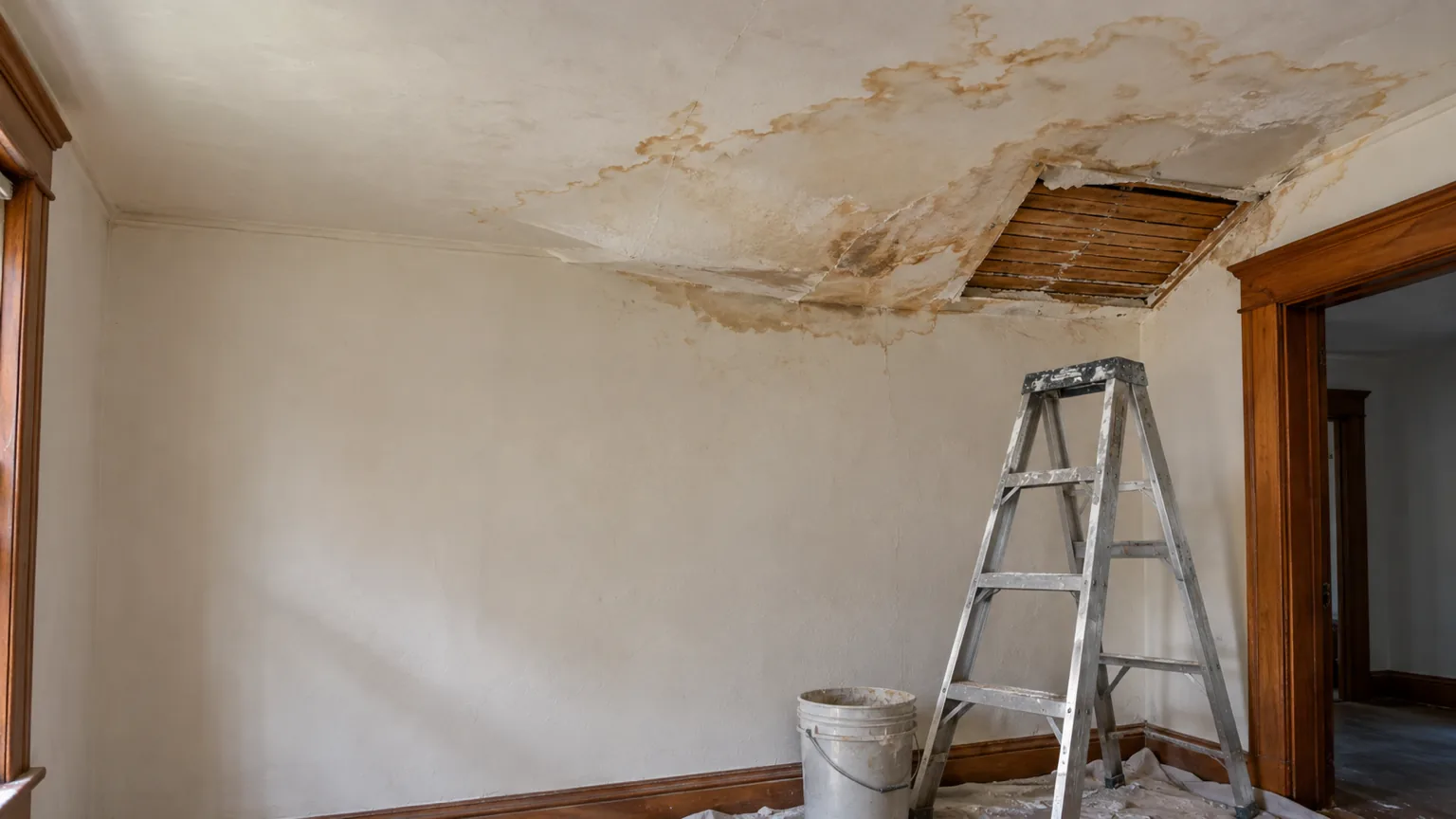
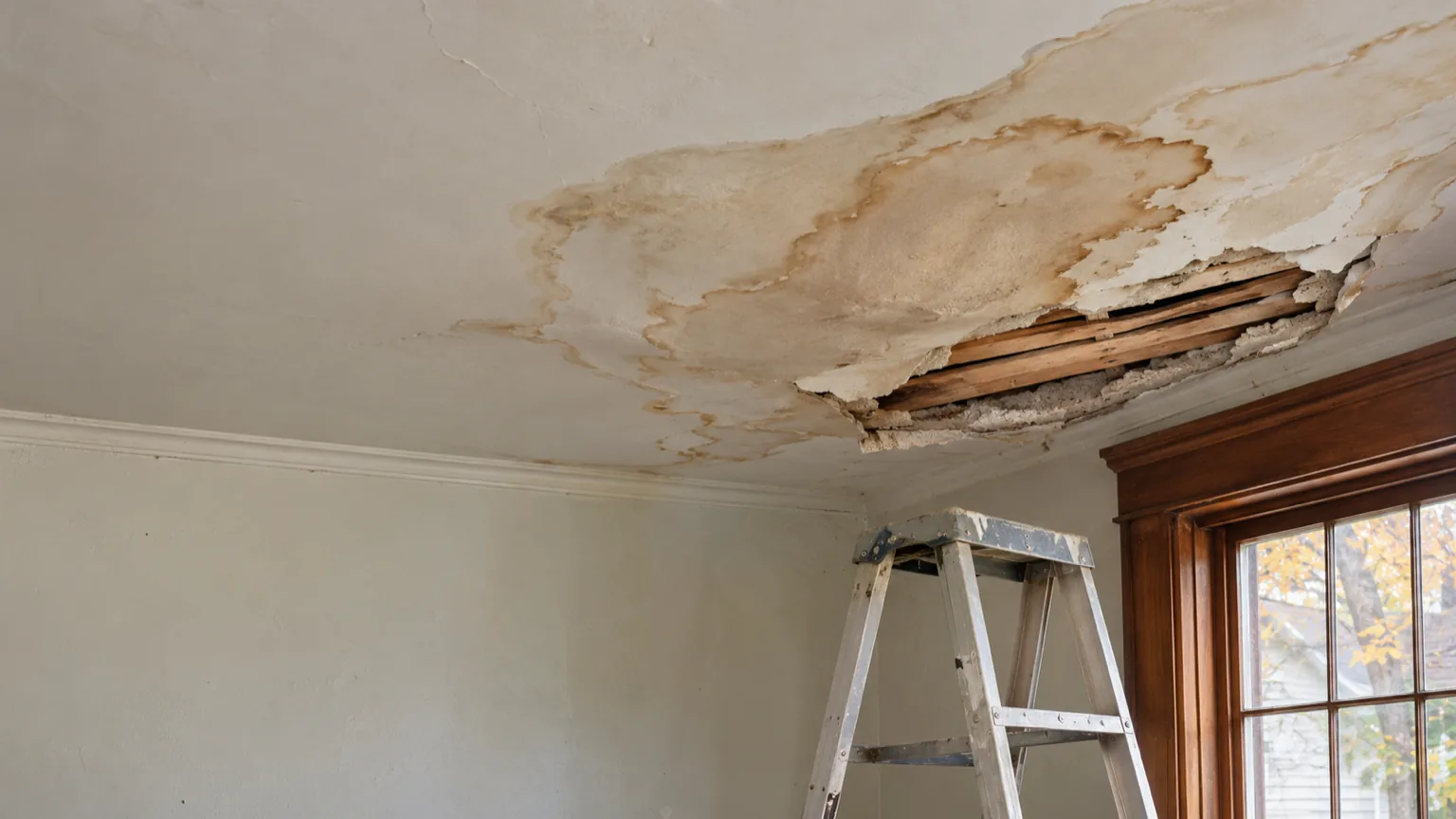
A water stain on a ceiling is rarely right under the leak. Water runs along a joist, a pipe or the back of the plaster until it finds a low spot to soak through, so the brown ring can sit several feet from the source. A damp or growing stain is still active. A dry ring with a crisp edge usually marks a leak that has stopped, and a moisture meter settles which one you have. A ceiling that bulges downward is holding water and needs a bucket under it now.
If the ceiling is dripping or starting to bow while you read this, put the guides down and call. A person answers at any hour, talks you through shutting off the water and draining a bulge safely, and sends our ceiling crew to trace the leak and rebuild what got wet.
Call a Ceiling Repair Crew