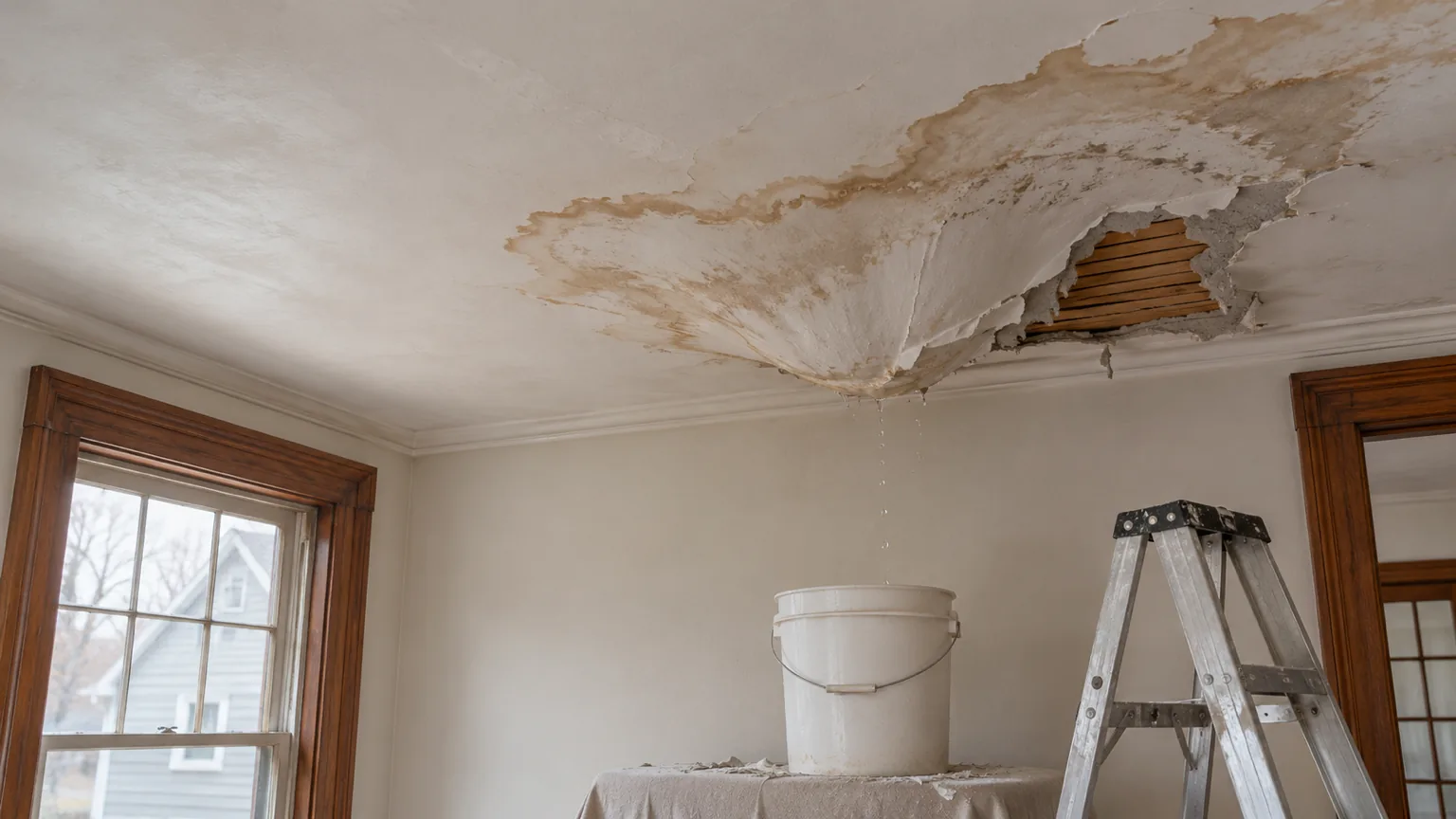
When water comes through the ceiling, shut off the water feeding it, switch off the breaker for any wet light or fan, and set a bucket under the drip. If the ceiling bulges, a small hole at its lowest point drains it. Photograph everything before cleanup, because Massachusetts insurers judge water damage on how it happened.
Key takeaways
- The Massachusetts Division of Insurance found that 48.6% of homeowners claims in the state in 2024 were non-flood water or freezing losses.
- Most homeowners policies cover burst-pipe water just when the house was kept heated and not left unoccupied, according to the Division of Insurance.
- The EPA advises drying wet building materials within 24 to 48 hours to keep mold from growing.
- In a home built before 1978, paid work that disturbs more than 6 square feet of painted ceiling in a room falls under the state lead-safe renovation rules.
What to Do First When Water Comes Through Your Ceiling
Stop the water at its source, then cut power to anything wet, then give the water somewhere to go, because a bucket does nothing about a supply line still pushing water into the ceiling.
- Shut off the water. If the leak sits under a bathroom, close the valve behind the toilet or under the sink. If you cannot tell where it comes from, or a pipe has burst, close the main shutoff, usually where the water line enters the basement.
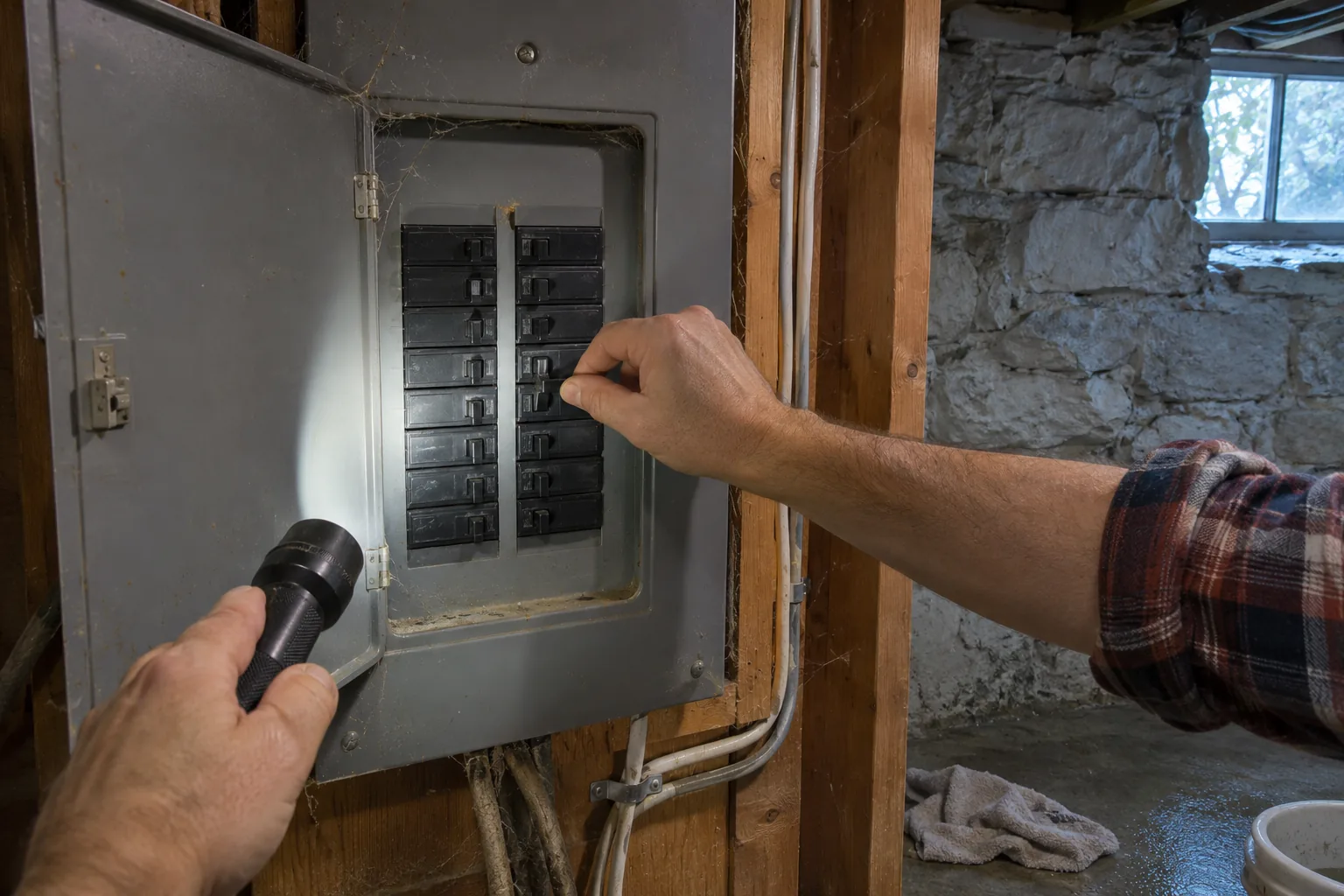
- Switch off the circuit. Turn off the breaker for any light, fan or outlet near the water. Leave the wall switch alone if it is wet.
- Catch the drip. Put a bucket or a storage bin under it, with a towel inside to stop splashing, and spread towels or plastic around it.
- Relieve a bulge. If the ceiling is bowing down, drain it through a small hole at the lowest point (details below).
- Move what you can. Pull rugs, electronics and furniture out from under the wet area.
- Take photos and video. Record the ceiling, the drip, the water on the floor and anything damaged, before you clean up.
When we take a call about repairing leaking ceilings statewide, the first question is whether the water has been shut off yet, because nothing on the ceiling side can start until it is.

Text version of this infographic
Six steps when water comes through the ceiling. Stop the water, cut power to anything wet, then give the water somewhere to go.
- Shut off the water. Close the valve for the leak, or the main shutoff if a pipe has burst.
- Switch off the circuit. Turn off the breaker for any light, fan or outlet near the water.
- Catch the drip. Put a bucket under it with a towel inside to stop splashing.
- Relieve a bulge. Drain a bowing ceiling through a small hole at the lowest point.
- Move what you can. Pull rugs, electronics and furniture out from under the wet area.
- Take photos and video. Record the ceiling, the drip and the damage before you clean up.
Order of first response as described in the post; photograph everything before cleanup.
Is a Leaking Ceiling an Emergency?
A leaking ceiling is an emergency when it sags, drips near a light or keeps coming after you have shut the water off. A dry brown stain that has not grown in weeks is not one, though it still means water got in at some point.
| What you see | Emergency? | Why |
|---|---|---|
| Ceiling bowing or bulging downward | Yes | It is holding water, and the weight grows until the board or plaster gives way |
| Water dripping from a light fixture, fan or smoke detector | Yes | Water is in the electrical box, so the wiring is wet |
| Steady flow that continues with the water shut off | Yes | The source is something you have not found, often a roof or a neighbor's unit |
| Cracks spreading across the ceiling with a wet edge | Yes | Plaster or drywall joints are letting go as they soak |
| Slow drip that stopped when an upstairs fixture was shut off | Urgent, not dangerous | The source is found; the ceiling still needs drying within a day or two |
| Dry, old stain that has not changed | No | Check it with a moisture meter and repair it on a normal schedule |
Finding Where the Water Is Coming From
Where the water started is usually not where it drips, because water runs along joists, pipes and the back of the ceiling board before it finds a seam or a fixture hole to fall through. The pattern of when it leaks tells you more than where.
| When it leaks | Likely source | What to shut off or check |
|---|---|---|
| Only when someone showers, bathes or flushes upstairs | Tub drain, shower valve, grout or a failed toilet wax ring | Stop using that bathroom; close the toilet's supply valve |
| Constantly, whether or not anything is running | A supply pipe or a water heater line | Close the main shutoff |
| During or after rain | Roof flashing, a vent boot or a chimney | Nothing to shut off; catch the water and call a roofer |
| On a sunny day after snow, near an outside wall | An ice dam backing meltwater under the shingles | Catch the water; the roof side needs clearing |
| In summer, under the attic or a closet with an air handler | A clogged air conditioning condensate line | Turn the system off at the thermostat |
| On the coldest mornings, on the top floor, with frost in the attic | Attic condensation melting off the roof boards | Note the weather; the attic needs ventilation work |
Massachusetts winters push the bottom half of that table. NOAA's 1991-2020 climate normals give the Worcester airport 129.7 nights a year at or below freezing and 72.9 inches of snow, against 91.6 freezing nights at Boston Logan. More freezing nights mean more frozen pipes in outside walls and more ice dams, which is why so many ceiling leaks in Worcester and the hill towns start in January and February.
A pipe that froze overnight often holds until it thaws, so a burst pipe frequently shows up as water through the ceiling late the next morning.
Draining a Bulging Ceiling Without Bringing It Down
A ceiling that bulges is holding water, and a small hole at its lowest point lets that water drain into a bucket before the weight tears a larger section loose. Set the bucket first, stand to the side, and push a screwdriver straight up through the lowest spot. Expect a fast stream at first.
Keep the hole small and keep everyone else out of the room while it drains. If the bulge is larger than a dinner table or the surface is cracking in rings, skip the screwdriver and leave the room, because when a ceiling starts to sag that far, a section can fall while you work under it.
Plaster ceilings need one more caution. Massachusetts asbestos rules (310 CMR 7.15) list plaster and ceiling tiles as suspect materials, and untested suspect material has to be handled as if it contains asbestos. A screwdriver hole to drain water is a small disturbance. Pulling down a soaked plaster ceiling yourself is a large one, so leave the tear-out until someone has decided whether the plaster needs testing.
Keeping Wet Lights and Wiring Safe
If water comes through a light fixture or a ceiling fan, switch that circuit off at the breaker panel and leave the wall switch alone. Water that reaches a fixture has already run through the electrical box above it, so the wiring is wet even if the light still works.
If the panel sits in a wet basement, or you see sparks, smell burning or the lights flicker, keep away and call the fire department. After the ceiling dries, have an electrician check the fixture before you turn it back on, because corrosion inside a box can cause trouble weeks later.
Photographing a Ceiling Leak for a Massachusetts Insurance Claim
Photograph the ceiling, the drip and everything wet before anything is moved or opened, because the adjuster sees the damage mostly through what you recorded. Water losses are the most common kind of claim here: the Massachusetts Division of Insurance found that 48.6% of homeowners claims in the state in 2024 were non-flood water or freezing losses.
Record these before cleanup starts:
- Wide shots of the room, then close-ups of the stain, the drip point and any sag.
- The source, if you found it: the cracked pipe, the leaking toilet base, the ice at the eave.
- Damaged belongings, with their labels or model numbers where you can read them.
- The time you found the leak and what you did about it, written down that day.
How it happened decides most claims. The Division of Insurance says most homeowners policies cover sudden and accidental water damage from a burst pipe provided the house was properly heated and not left unoccupied. Ice dam damage can qualify for coverage if it is sudden and not caused by a lack of maintenance, and the Division tells homeowners to confirm with their insurer or agent. A slow drip that stained the ceiling over months usually counts as wear. Keep any wet ceiling material that gets cut out until the adjuster has seen it or said they do not need it. Our page on coverage for ceiling leaks walks through what to ask your insurer.
What Happens to a Wet Ceiling After the Water Stops
A wet ceiling gets opened, dried and checked with a moisture meter before anything is closed up or painted. The EPA advises drying wet building materials within 24 to 48 hours to prevent mold, and a closed ceiling cavity holds water far longer than the surface suggests, which is why the soaked section is usually cut out so air can reach the joists.
Soaked drywall rarely dries flat again and is normally replaced. Wet plaster can lose its grip on the wood lath behind it when the plaster keys break, so a plaster ceiling that looks intact can be loose a foot past the stain. On plaster, the loose area usually runs wider than the brown ring, so a repair priced from the stain alone tends to come up short.
Two Massachusetts rules come into play here. The state building code, 780 CMR 105.2.1, says that when a repair has to be made in an emergency, the permit application goes to the building official within the next working business day, so an after-hours repair does not wait for an open office. And in a home built before 1978, paid work that disturbs a painted ceiling area larger than 6 sq ft in a room must be done by a licensed Lead-safe Renovation Contractor under 454 CMR 22.11, unless a certified test shows the paint is free of lead. The full repair, from cut-out to paint, is covered step by step in a related ceiling guide.
Mistakes That Make Ceiling Water Damage Worse
The costliest mistake is painting or patching a ceiling that is still wet inside, because the paint seals the moisture in, the stain bleeds back through within days, and the board behind it keeps softening.
- Turning the light on to see better. Use a flashlight until the circuit has been checked.
- Standing on a ladder under a sag. The ceiling can drop onto the ladder.
- Waiting for the drip to stop on its own. The drip often stops long before the cavity is dry.
- Pulling down wet plaster by hand. It is heavy, it may need asbestos testing, and the dust from old paint can carry lead.
- Judging the damage from the stain. A photo shows the surface; only a moisture meter or an opened ceiling shows how far the water went.
Water Through the Ceiling: Your Questions
Can a ceiling collapse from a leak?
Yes. Gypsum board loses strength as it soaks, and water pooling on top of it adds weight until a section tears free. Plaster can let go of its lath all at once. A ceiling that bows downward is the clearest warning, so keep people out from under it.
Who should I call first, a plumber, a roofer or a ceiling repair company?
Call whoever can stop the source first. A leak tied to a bathroom or a pipe needs a plumber; a leak that comes with rain or melting snow needs a roofer. The ceiling crew comes next, to open, dry and rebuild the damaged section once the water has stopped.
Is it safe to sleep in a room with a leaking ceiling?
Not if the ceiling sags or the water is near a light fixture. A slow drip into a bucket from a flat, firm ceiling with the circuit off is lower risk, but move the bed out from under it anyway.
Should I turn off the main water if I can't find the leak?
Yes. If the drip does not line up with any fixture you can shut off, close the main shutoff and watch the ceiling. If the water stops, the source is plumbing. If it keeps coming with the main closed, look at the roof, an ice dam or the unit above.
What if the water is coming from the unit upstairs?
Tell the upstairs owner, the landlord or the condo association right away so they can shut off the source on their side. Photograph your ceiling before anyone starts work. Each owner's insurer usually looks at their own unit, so report the damage to yours even if the leak started above you.
Does a leaking ceiling mean mold will grow?
Not always, but the clock starts when the ceiling gets wet. The EPA advises drying wet materials within 24 to 48 hours to prevent mold. A ceiling that is opened and dried inside that window usually needs no mold work; one closed up wet often does.
Will a roof leak stop once the rain or thaw stops?
The drip usually stops, but the ceiling stays wet. Soaked insulation keeps the cavity damp for days, and the same opening leaks again in the next storm. Have the roof side fixed and the ceiling checked with a moisture meter before you paint.
Our line is answered 24/7, so if water is still coming through your ceiling, call while it is happening and a person will talk you through the first steps.